
Trauma Therapy in Paradise Valley for Understanding the Patterns You Carry
If you are looking for Trauma Therapy in Paradise Valley, NV, you may have become accustomed to carrying more than other people realize. You may manage responsibilities, relationships, and everyday life while privately dealing with anxiety, emotional overwhelm, difficult memories, or reactions that seem stronger than the situation in front of you. Kelsey Karr Therapy provides a collaborative space to slow down, understand where these patterns may come from, and develop healthier ways of responding. Therapy can be personalized around childhood trauma, life stressors, anxiety, depression, relationships, religious trauma, and other difficult experiences.
Making Sense of What You Carry With Trauma Therapy in Paradise Valley
You may have learned to keep moving even when something inside you feels unsettled.
Perhaps you are the person others rely on. You handle responsibilities, try to keep relationships stable, and find ways to get through difficult situations without showing how much they affect you. You may even wonder why you still feel anxious, guarded, overwhelmed, or emotionally exhausted when you have already moved past the circumstances that created those feelings.
Sometimes knowing that something is over does not mean your reactions immediately change.
A conversation with a partner may bring up a level of fear or defensiveness that seems difficult to explain. A disagreement may leave you thinking about it for hours. Setting a simple boundary may create guilt. Or you may find yourself trying to anticipate what everyone else needs while remaining unsure about your own needs.
Trauma focused therapy can provide a place to slow down and understand these responses.
The goal is not to judge the ways you learned to cope. It is to understand what those responses have meant in your life and explore whether you want to respond differently now.
When Being Strong Becomes a Way of Hiding What You Need
Being capable and independent can be valuable qualities.
But sometimes being the strong one becomes a role that leaves very little room for your own emotions.
You may be comfortable helping other people but uncomfortable asking for help yourself. You may minimize your own struggles because someone else seems to have it worse. You may tell yourself that you should be able to handle things on your own, even when you are emotionally exhausted.
Over time, constantly managing everything can make it difficult to recognize when you actually need support.
You might notice:
Difficulty slowing down
Trouble asking for what you need
Feeling responsible for other people's emotions
Guilt when you say no
Anxiety when someone is disappointed with you
Avoiding difficult conversations
Feeling overwhelmed by relatively small changes
Difficulty allowing yourself to be vulnerable
These patterns can have many different causes. Therapy offers a place to explore your individual experience rather than assuming there is one explanation for why you respond the way you do.

Why Your Reactions Can Continue After the Situation Has Changed
You may understand that you are safe now while still reacting as though something from the past is happening again.
A certain tone of voice may make you tense. Conflict may cause you to shut down. Someone becoming distant may create intense worry. A familiar situation may bring back emotions that seem much bigger than what is happening in the present.
You may even criticize yourself for reacting this way.
Instead of asking, "Why am I still like this?" therapy can help you become curious about what your response is communicating.
Understanding the difference between what happened then and what is happening now can be an important part of developing greater awareness. As you recognize your triggers, emotions, protective responses, and relationship patterns, you may have more opportunities to choose how you want to respond.
Understanding the Protective Patterns Behind Anxiety and Overwhelm
Sometimes the patterns that create difficulties today began as ways of protecting yourself.
You may have learned to keep everyone happy because conflict once felt unsafe. You may overthink because being prepared seemed like the best way to prevent something from going wrong. You may avoid emotional conversations because vulnerability once came with consequences.
Other patterns may include perfectionism, people pleasing, emotional shutdown, withdrawing from others, or trying to maintain control when uncertainty feels uncomfortable.
These responses do not have to be treated as character flaws.
Kelsey incorporates Parts work into her approach, creating space to understand the different protective responses that may influence how you think, feel, and behave.
The purpose is not to fight against yourself.
It is to understand yourself with greater compassion and develop more flexibility in how you respond.
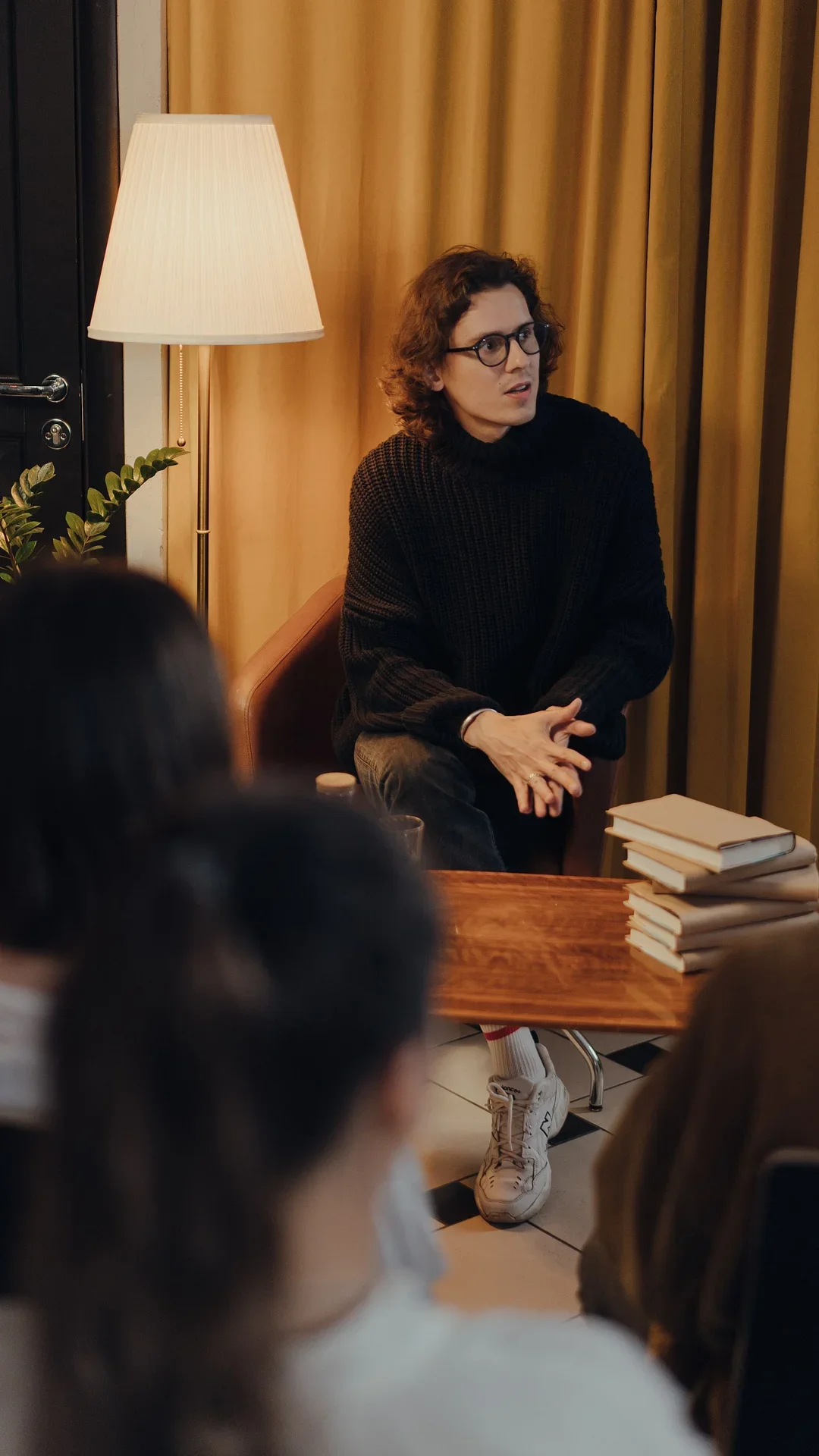
Using Brainspotting When Talking Is Not the Whole Process
Talking about your experiences can be an important part of therapy, but sometimes words do not fully capture what you are experiencing.
You may know exactly what happened but still notice a strong emotional or physical reaction when you remember it. You may understand something intellectually while feeling like another part of you has not caught up.
Brainspotting is one of the approaches Kelsey uses in her trauma focused practice.
It may provide another way to explore experiences connected with trauma, anxiety, emotional overwhelm, dissociation, and other concerns that can feel difficult to shift through conversation alone.
Brainspotting does not need to replace talking or other therapeutic approaches. It can be incorporated into a broader, individualized treatment process when it makes sense for your goals and comfort level.
Learning to Set Boundaries Without Losing Connection
Boundaries can become complicated when you have learned to associate saying no with rejection, conflict, guilt, or disappointing someone.
You may know that you need a boundary but still find yourself explaining it repeatedly, changing your mind, or avoiding the conversation altogether.
Perhaps you agree to things you do not want to do because saying no feels uncomfortable. Or you may become frustrated when other people do not recognize your needs without you expressing them.
Therapy can create space to explore what makes boundaries difficult for you.
Rather than approaching boundaries as a way to push people away, you can explore how clearer communication can support healthier relationships while allowing you to remain connected to yourself.
Individual Therapy for Trauma, Anxiety, and Difficult Life Experiences
Individual therapy gives you a dedicated space to focus on what you are experiencing.
Kelsey works with adults and teens experiencing trauma, anxiety, depression, life stressors, relationship concerns, and other challenges. Her approach can draw from Complex Trauma work, Cognitive Behavior Therapy, Dialectical Behavior Therapy, EMDR, Mindfulness, Brainspotting, attachment focused therapy, and Parts work.
Your therapy does not have to follow a predetermined formula.
You may begin by talking about anxiety and gradually recognize how it connects with earlier experiences. You may begin with relationship difficulties and discover patterns that have appeared in other parts of your life. Or you may simply know that something does not feel right and want help understanding it.
The work can develop around your goals, experiences, and pace.
When Trauma Patterns Show Up in Your Closest Relationships
The effects of difficult experiences can become especially noticeable in close relationships.
You may want emotional closeness but become uncomfortable when someone gets too close. You might withdraw during conflict, become anxious when your partner needs space, or struggle to explain what you are feeling.
Sometimes couples become caught in the same cycle repeatedly.
One person reaches for connection while the other pulls away. One becomes more anxious while the other becomes more guarded. Both people may feel misunderstood even though both want the relationship to improve.
Kelsey also offers Couples Therapy for partners experiencing communication difficulties, disconnection, and recurring conflict.
Understanding the protective patterns behind these interactions can help create a different starting point for communication and connection.
Religious Trauma Therapy for Rebuilding Trust in Yourself
For some people, difficult experiences are connected to religion or a high control religious environment.
You may be working through fear, shame, identity confusion, loss of community, or uncertainty about what you believe now. You may also struggle to trust your own decisions after spending years being told what you should believe, feel, or value.
Religious Trauma Therapy can provide space to explore these experiences without requiring you to adopt someone else's interpretation.
The work can focus on understanding what happened, processing difficult emotions, and reconnecting with your own voice, values, and sense of safety.
See the Therapy Location Near Paradise Valley
For individuals in Paradise Valley seeking Trauma Therapy, Kelsey Karr Therapy, LLC is located at 3161 E Warm Springs Rd, Las Vegas, NV 89120. The office provides a Las Vegas location where therapy sessions can take place in a professional and private setting. Reviewing the destination beforehand can make it easier to organize travel for an upcoming appointment. The Google Map below provides the exact practice location and serves as a helpful reference for checking nearby roads and directions from Paradise Valley.
What Happens When You Reach Out for Therapy
You do not need to have your entire story organized before contacting Kelsey.
You can begin with whatever feels most relevant right now.
Maybe you are struggling with anxiety. Maybe you are tired of carrying emotional responsibility for everyone around you. Maybe your relationships keep repeating the same difficult patterns. Or perhaps you simply feel that the ways you have been coping are no longer working.
Kelsey offers a free 15 minute consultation where you can talk about what you are looking for and decide whether the practice feels like a good fit.
If you choose to begin therapy, your work can then be shaped around your goals, experiences, and comfort level.
You are allowed to start without having all the answers.
You Do Not Have to Carry Everything the Same Way
You may have spent a long time learning how to manage difficult situations, protect yourself, meet expectations, and keep moving forward.
Those responses may have helped you at one point.
But you can also decide that you want something different now.
You may want to understand your emotions instead of constantly managing them. You may want to establish boundaries without overwhelming guilt. You may want to communicate more openly, feel safer being vulnerable, or develop a stronger sense of trust in yourself.
Trauma therapy can give you a space to explore those goals while making sense of the experiences and patterns that shaped you.
If you are looking for Trauma Therapy in Paradise Valley, NV, Kelsey Karr Therapy offers a collaborative approach for individuals and couples navigating trauma, anxiety, emotional overwhelm, relationship concerns, religious trauma, and difficult life experiences.
Frequently Asked Questions
-
Some people develop a strong sense of responsibility for other people's emotions or needs after difficult experiences. Therapy can help you explore where that pattern comes from and whether you want to relate to responsibility and relationships differently.
-
Guilt can sometimes appear when setting boundaries feels unfamiliar or when you have learned to prioritize other people's needs. Therapy can provide space to understand what makes boundaries difficult and develop ways to communicate your needs more comfortably.
-
People pleasing can develop for many different reasons. For some individuals, keeping others happy may have become a way to avoid conflict, rejection, or uncertainty. Therapy can help you explore your specific pattern rather than assuming why it developed.
-
It may be helpful for some people who understand their experiences intellectually but continue to notice strong emotional or physical responses. Kelsey can discuss whether Brainspotting fits your needs and how it could be incorporated into your therapy.
-
Therapy can provide an opportunity to explore what may be driving perfectionism or persistent overthinking. Understanding the protective purpose behind these patterns can create space to develop more flexible ways of responding.
-
Therapy can provide a supportive environment for exploring what makes vulnerability difficult. Over time, understanding your protective responses and relationship patterns may help you develop greater awareness around trust, communication, and emotional connection.
You Can Make Room for What You Need
You do not have to keep carrying every expectation, responsibility, or emotional pattern in the same way simply because it has become familiar.
Therapy can give you a place to understand what you have experienced, recognize the ways you learned to protect yourself, and explore how you want to move forward.
If you are ready to take the first step, Kelsey Karr Therapy offers a free 15 minute consultation to talk about what you are looking for.
Contact Kelsey Karr Therapy today to schedule your consultation.